

What to Know Before Building an Orthodontic Office in Minnesota
Planning an orthodontic build-out? This comprehensive guide covers chair configurations, sterilization workflow, imaging requirements, and Minnesota-specific construction costs.
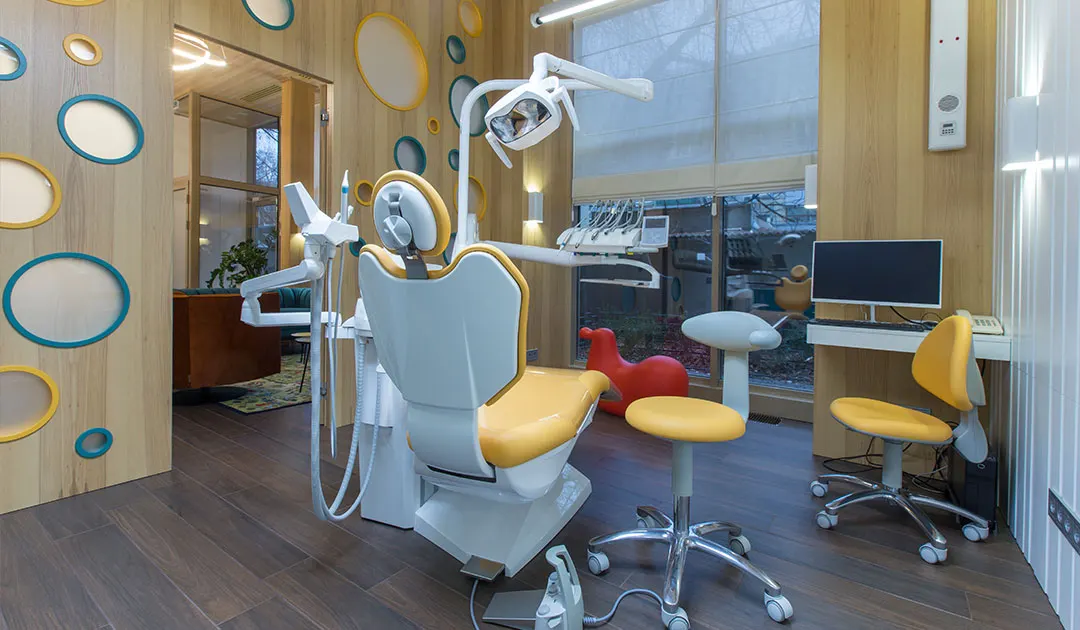
Building an orthodontic office requires fundamentally different planning than a general dental practice. While both fall under dental construction, orthodontic clinics face unique challenges: higher patient volumes with shorter appointment times, specialized imaging equipment, open treatment environments, and workflows designed around efficiency rather than procedural complexity.
Many orthodontists underestimate these differences when planning their first build-out-or their expansion. The result? Clinics that bottleneck during peak hours, sterilization areas that disrupt patient flow, and imaging rooms that weren't sized for the equipment they actually needed.
This guide covers the essential planning considerations for orthodontic office construction in Minnesota, from the open bay versus private room debate to sterilization workflow design, imaging space requirements, and realistic cost expectations. Whether you're building your first practice or expanding to a new location, understanding these factors upfront will save significant time, money, and frustration during construction.
At Keystone Design Build, we've completed orthodontic projects ranging from the 3,410 square foot Blaine Ortho tenant fit-up to the 2,596 square foot Central Minnesota Ortho clinic in Sartell. Each project reinforced a simple truth: orthodontic construction done right starts with understanding how orthodontic practices actually operate.
Open Bay vs. Private Treatment Rooms: Making the Right Choice
The single biggest design decision in orthodontic clinic design is treatment area configuration. Unlike general dentistry, where private operatories are standard, orthodontics has traditionally embraced open bay treatment areas. But the landscape is shifting, and understanding the trade-offs helps you make the right choice for your practice.
Open Bay Treatment Areas
Open bay designs place multiple orthodontic chairs in a shared treatment space, typically arranged in rows or a curved configuration. This approach dominates orthodontic practice design for good reason.
Advantages of open bay:
- Staff efficiency: Assistants can monitor and support multiple patients simultaneously, reducing the staff-to-chair ratio
- Higher throughput: Shorter travel distances between patients means more appointments per hour
- Lower cost per chair: Shared HVAC, lighting, and infrastructure reduces per-station construction costs
- Collaborative environment: Easier for doctors to supervise assistants and maintain quality control
- Patient psychology: Many patients (especially younger ones) feel more comfortable in an open, active environment rather than isolated rooms
Challenges to address:
- Acoustic management: Conversations carry in open spaces; sound masking systems and strategic material choices help
- Privacy concerns: HIPAA compliance requires careful attention to where sensitive conversations occur
- Temperature control: Large open spaces can be harder to climate-control consistently
- Infection control protocols: Requires disciplined workflow to prevent cross-contamination
Private Treatment Rooms
Some orthodontists prefer private or semi-private treatment rooms, particularly for adult patients or practices emphasizing a boutique experience.
Advantages of private rooms:
- Enhanced patient privacy for sensitive discussions
- Easier infection control with physical separation
- Focused consultation environment
- Premium positioning for adult orthodontics or clear aligner practices
Challenges to consider:
- Higher square footage requirement (120-150 sq ft per chair vs. 80-100 in open bay)
- Increased staffing complexity-assistants can't easily float between patients
- Higher HVAC costs with more individual zones
- Potentially lower daily patient capacity
The Hybrid Approach
Most modern orthodontic offices we build use a hybrid configuration: an open bay treatment area with four to eight chairs, plus one or two private rooms for consultations, new patient exams, or patients who prefer privacy. This approach captures the efficiency benefits of open bay while accommodating patients and situations that benefit from privacy.
| Configuration | Best For | Sq Ft Per Chair | Staff Efficiency |
|---|---|---|---|
| Open Bay | High-volume practices, pediatric/teen focus | 80-100 sq ft | Excellent |
| Private Rooms | Boutique practices, adult-focused, Invisalign-heavy | 120-150 sq ft | Moderate |
| Hybrid | Most practices seeking balance | 90-120 sq ft average | Very Good |
Chair Bay Configurations and Space Requirements
Once you've decided on your treatment area approach, the next question is how many chairs and how much space you actually need. Getting this wrong creates problems that are expensive to fix later.
Chair Spacing Standards
In open bay configurations, chair spacing directly impacts both patient comfort and clinical efficiency:
- Minimum spacing: 6 feet center-to-center allows basic function but feels cramped
- Recommended spacing: 7-8 feet center-to-center provides comfortable working room for assistants and adequate patient privacy
- Premium spacing: 8+ feet creates a spacious feel and accommodates larger equipment carts
The spacing you choose affects your total square footage significantly. A six-chair bay at 6-foot spacing requires roughly 36 linear feet; at 8-foot spacing, you need 48 linear feet-a 33% increase that ripples through your entire floor plan.
Square Footage Planning by Practice Size
Based on projects we've completed across Minnesota, here are realistic square footage ranges for complete orthodontic facilities (not just treatment areas):
Small Practice (4 chairs)
- Treatment area: 400-500 sq ft
- Total facility: 1,400-1,800 sq ft
- Typical daily capacity: 30-40 patients
- Suitable for: Solo practitioners, satellite locations
Medium Practice (6 chairs)
- Treatment area: 600-750 sq ft
- Total facility: 2,000-2,600 sq ft
- Typical daily capacity: 50-70 patients
- Suitable for: Established solo practices, small partnerships
Large Practice (8+ chairs)
- Treatment area: 800-1,000+ sq ft
- Total facility: 2,800-4,000+ sq ft
- Typical daily capacity: 80+ patients
- Suitable for: Multi-doctor practices, high-volume operations
Our Blaine Ortho project delivered 3,410 square feet with flexible treatment areas and exposed ceilings-a design that maximizes the sense of space while maintaining efficient patient flow.
Utility Requirements at Each Station
Every orthodontic chair station needs:
- Vacuum: Central vacuum system with individual station drops
- Compressed air: For handpieces and air-water syringes
- Water supply: Hot and cold for patient comfort
- Electrical: Minimum two dedicated circuits per station for curing lights, handpieces, and monitors
- Data: CAT6 cabling for practice management integration and chairside monitors
Planning these utilities during initial construction is vastly less expensive than retrofitting later. We've seen practices spend three to four times as much adding a single chair station after construction because it requires cutting into finished floors and ceilings.
Sterilization Workflow Design
Sterilization areas in orthodontic offices often get shortchanged during planning-they're not patient-facing, so they're easy to minimize. This is a mistake. A poorly designed sterilization area creates bottlenecks that slow your entire operation and can create compliance issues with the Minnesota Board of Dentistry.
Central vs. Distributed Sterilization
Most orthodontic offices benefit from a central sterilization area rather than distributed stations. Central sterilization:
- Consolidates expensive equipment (autoclaves, ultrasonic cleaners)
- Simplifies compliance monitoring
- Reduces total square footage dedicated to sterilization
- Creates clear workflow accountability
The exception might be very large multi-wing facilities where a distributed approach reduces instrument transport distances.
Unidirectional Workflow
The fundamental principle of sterilization design is unidirectional flow: contaminated instruments enter on one side, move through processing, and exit clean on the other side. Cross-contamination becomes much harder when dirty and clean never share pathways.
A properly designed sterilization workflow includes these zones:
- Receiving/decontamination: Dirty instruments arrive, are logged, and undergo initial cleaning
- Cleaning: Ultrasonic cleaning and manual scrubbing
- Inspection and packaging: Instruments are checked, assembled into cassettes or pouches, and prepared for sterilization
- Sterilization: Autoclave processing
- Storage/distribution: Clean, sterile instruments are stored and distributed to treatment areas
Space Requirements
For a typical 4-8 chair orthodontic practice, plan for:
- Minimum: 80 square feet for basic central sterilization
- Recommended: 100-120 square feet for comfortable workflow
- Equipment footprint: Autoclave (6-8 sq ft), ultrasonic cleaner (4-6 sq ft), handpiece maintenance unit (2-3 sq ft), plus counter space and storage
Strategic Placement
Location matters as much as size. The sterilization area should be:
- Centrally located to minimize walking distances from all treatment stations
- Adjacent to (but separated from) the clinical area
- Accessible but not visible to patients
- Near plumbing runs to reduce installation costs
Minnesota Board of Dentistry conducts periodic inspections, and sterilization areas receive particular scrutiny. Building it right from the start is far easier than remediation.
Imaging Equipment Space Planning
Modern orthodontics relies heavily on diagnostic imaging, and the equipment keeps getting larger and more capable. Planning imaging space requires understanding both current needs and likely future technology.
Panoramic and Cephalometric Units
Most orthodontic practices need at minimum a combination pan/ceph unit for initial records and progress monitoring.
Space requirements:
- Minimum room size: 8 x 10 feet (80 sq ft)
- Recommended: 10 x 10 feet (100 sq ft) for comfortable patient positioning
- Ceiling height: 9 feet minimum for most units
Minnesota compliance:The Minnesota Department of Health regulates dental X-ray equipment. Requirements include:
- Radiation shielding per MDH specifications (typically lead-lined walls or equivalent)
- Proper signage and exposure indicators
- Annual equipment inspection and registration
- Operator certification requirements
Building radiation shielding into new construction is straightforward; retrofitting existing walls is significantly more expensive.
Cone Beam CT (CBCT)
Many orthodontic practices are adding CBCT capability for complex cases, impacted teeth evaluation, and airway assessment. CBCT units have larger footprints and higher infrastructure requirements:
- Room size: 10 x 12 feet minimum, 12 x 14 feet recommended
- Electrical: Dedicated 20-30 amp circuit, depending on unit
- Structural: Some units require reinforced flooring
- Shielding: More extensive than standard pan/ceph due to higher radiation output
If you're not installing CBCT immediately but might in the future, consider building the room to CBCT specifications now. The incremental cost during construction is minimal compared to renovation later.
Digital Scanner Stations
Intraoral scanners like iTero and TRIOS have become essential for clear aligner workflows and are increasingly used for all bracket placement planning. Practices like Crow River Orthodontics use TRIOS digital impressions and precision bracket placement technology to improve efficiency and patient experience.
Scanner stations can be:
- Mobile: Scanner on a cart that moves between treatment stations
- Fixed: Dedicated scanning station, often combined with photography
Either approach requires:
- Robust Wi-Fi or wired network connectivity for large file transfers
- Integration with practice management software
- Adequate lighting for consistent scan quality
- Storage for scanner tips and accessories
Records Room Design
Many practices combine imaging, scanning, and photography in a dedicated records room. A well-designed records room includes:
- Pan/ceph unit with appropriate shielding
- Scanner station with good lighting
- Photography setup (background, lighting, camera mount)
- Consultation seating for reviewing images with patients
- Monitor or display for case presentation
Plan 150-200 square feet for a comprehensive records room, or 250+ square feet if including CBCT.
Technology Integration and Digital Workflow
Orthodontic practices generate enormous amounts of digital data-3D scans, photographs, X-rays, treatment simulations, and patient records. Your construction needs to support this digital infrastructure from day one.
Network Infrastructure
Robust networking is non-negotiable for modern orthodontic practice:
- Cabling: CAT6 minimum to every workstation, treatment bay, and equipment location
- Bandwidth: Plan for large file transfers; imaging files can exceed 100MB each
- Redundancy: Consider dual internet connections for practices heavily dependent on cloud services
- Wi-Fi: Enterprise-grade access points for mobile devices and portable scanners
Run more cable drops than you think you need. Adding network drops after construction requires opening walls and ceilings.
Server Room or IT Closet
Even cloud-based practices need local network equipment:
- Minimum: Dedicated, ventilated closet (20-30 sq ft) for switches, router, and UPS
- Recommended: Climate-controlled room if housing local servers or NAS storage
- Requirements: Dedicated electrical circuit, adequate cooling, secure access
Chairside Technology
Each treatment station increasingly incorporates technology:
- Monitors: 19-24 inch displays for patient education and record review
- Mounting: Articulating arms or fixed mounts (plan structural support)
- Connectivity: Network and power at each position
- Future-proofing: Conduit for adding technology later
3D Printing
In-house 3D printing for aligners, retainers, and models is becoming common. Plan for:
- Ventilated space for resin printers (fumes require exhaust)
- Post-processing area (washing, curing stations)
- Adequate electrical capacity
- Storage for materials and finished products
Orthodontic Office Construction Costs in Minnesota
Budget anxiety is the number one concern we hear from orthodontists planning new offices. Understanding realistic cost ranges helps you plan effectively and avoid surprises.
Construction Cost Ranges
Current construction costs for orthodontic offices in Minnesota (as of 2025-2026):
| Finish Level | Cost Per Sq Ft | Description |
|---|---|---|
| Standard | $125-$175 | Quality materials, functional design, standard finishes |
| Mid-Range | $175-$225 | Upgraded finishes, custom millwork, enhanced lighting |
| High-End | $225-$300+ | Premium materials, architectural features, boutique aesthetic |
These ranges cover construction only-demolition (if applicable), framing, electrical, plumbing, HVAC, finishes, and general contractor fees.
Budget Examples by Practice Size
2,000 sq ft practice (standard finish)
- Construction: $250,000-$350,000
- Design/architecture: $25,000-$40,000
- Permits and fees: $5,000-$15,000
- Contingency (10%): $28,000-$40,000
- Total construction budget: $308,000-$445,000
3,000 sq ft practice (mid-range finish)
- Construction: $525,000-$675,000
- Design/architecture: $50,000-$75,000
- Permits and fees: $8,000-$20,000
- Contingency (10%): $58,000-$77,000
- Total construction budget: $641,000-$847,000
4,000+ sq ft practice (high-end finish)
- Construction: $900,000-$1,200,000+
- Design/architecture: $80,000-$120,000
- Permits and fees: $12,000-$30,000
- Contingency (10%): $99,000-$135,000
- Total construction budget: $1,091,000-$1,485,000+
What's NOT Included
Construction budgets typically exclude:
- Orthodontic equipment: Chairs, units, X-ray equipment, scanners ($150,000-$400,000+)
- Furniture: Reception seating, office furniture, artwork ($20,000-$75,000)
- Signage: Interior and exterior signage ($5,000-$25,000)
- IT equipment: Computers, servers, networking hardware ($15,000-$50,000)
- Initial supplies and inventory: Brackets, wires, consumables
A complete practice launch typically requires 40-60% additional budget beyond construction costs.
Tenant Improvement vs. Ground-Up
Tenant improvements (build-outs within existing buildings) generally cost 15-30% less than ground-up construction because the shell, parking, and site work already exist. However, tenant improvements can carry hidden costs:
- Demolition of existing improvements
- Bringing older buildings up to current codes
- HVAC modifications for dental-specific requirements
- Structural limitations on equipment placement
Our Central Minnesota Ortho project in Sartell was a 2,596 square foot tenant fit-up that included treatment areas, lab spaces, and private offices-demonstrating what's achievable within existing building shells.
Timeline Expectations
Understanding realistic timelines helps you plan your practice launch and manage patient communication.
Pre-Construction Phase: 2-4 Months
- Design development: 4-8 weeks for schematic design through construction documents
- Permitting: 2-6 weeks depending on municipality (some Minnesota cities are faster than others)
- Bidding/contractor selection: 2-3 weeks if not using design-build
Construction Phase: 3-6 Months
Timeline varies significantly by project scope:
- Basic tenant improvement: 3-4 months
- Extensive renovation: 4-5 months
- Ground-up construction: 6-9 months
Equipment and Move-In: 2-4 Weeks
- Equipment delivery and installation
- IT setup and testing
- Final inspections and certificate of occupancy
- Staff training in new space
Minnesota-Specific Considerations
Winter construction: Projects starting in late fall may face weather delays for any exterior work. Interior tenant improvements are largely unaffected, but ground-up construction timelines should account for potential winter slowdowns.
Permitting variability: Permitting timelines vary significantly across Minnesota municipalities. St. Cloud, Waite Park, and Sartell typically process permits efficiently; some suburban Twin Cities communities have longer queues.
Why Design-Build Works for Orthodontic Projects
Traditional construction separates design (architect) from construction (general contractor). Design-build integrates both under a single contract and team. For orthodontic projects, this approach offers significant advantages.
Single Point of Accountability
When design and construction are separate, finger-pointing between architect and contractor is common when problems arise. Design-build eliminates this: one team is responsible for the entire project outcome.
Real-Time Cost Feedback
In traditional delivery, you don't know actual construction costs until bidding-often after months of design work. Design-build provides continuous cost feedback, allowing value engineering decisions during design rather than painful cuts after bids come in high.
Faster Delivery
Design-build projects typically complete 15-30% faster than traditional delivery. Construction can begin on early phases while design continues on later phases (fast-tracking), and there's no bid period between design and construction.
Specialized Expertise
General contractors who specialize in orthodontic and dental construction understand the unique requirements-infection control, equipment specifications, workflow optimization-that general commercial contractors may not. This expertise prevents costly mistakes and change orders.
At Keystone Design Build, our team has completed orthodontic clinic construction projects throughout Central Minnesota. We understand the specific requirements of orthodontic practice operations and build that knowledge into every project from the first design meeting.
Planning Your Orthodontic Office Project
Building an orthodontic office is one of the largest investments you'll make in your career. The decisions you make during planning-treatment area configuration, space allocation, technology infrastructure, construction approach-will affect your practice operations for decades.
The practices that launch successfully share common traits: they invest adequate time in planning, work with construction partners who understand orthodontic-specific requirements, and build flexibility into their designs for future growth and technology changes.
Whether you're planning your first practice or expanding to serve more patients across Minnesota, the right construction partner makes the difference between a space that enables your vision and one that constrains it.
Ready to discuss your orthodontic office project? Schedule a free consultation with our team to explore how design-build delivery can bring your practice vision to life-on time, on budget, and built to support the way modern orthodontics operates.
Latest articles and news
Browse all Articles
Ready to build your vision?
Keystone Design Build handles every detail from concept to completion. Tell us about your project and get a free consultation.
Planning a project like this? See how we build orthodontic clinics, with recent projects and the questions owners ask us.