

Designing a Dermatology Clinic: Exam Room, Procedure Room, and Laser Suite Requirements
Dermatology practices operate differently from most medical specialties, and the building needs to reflect that.
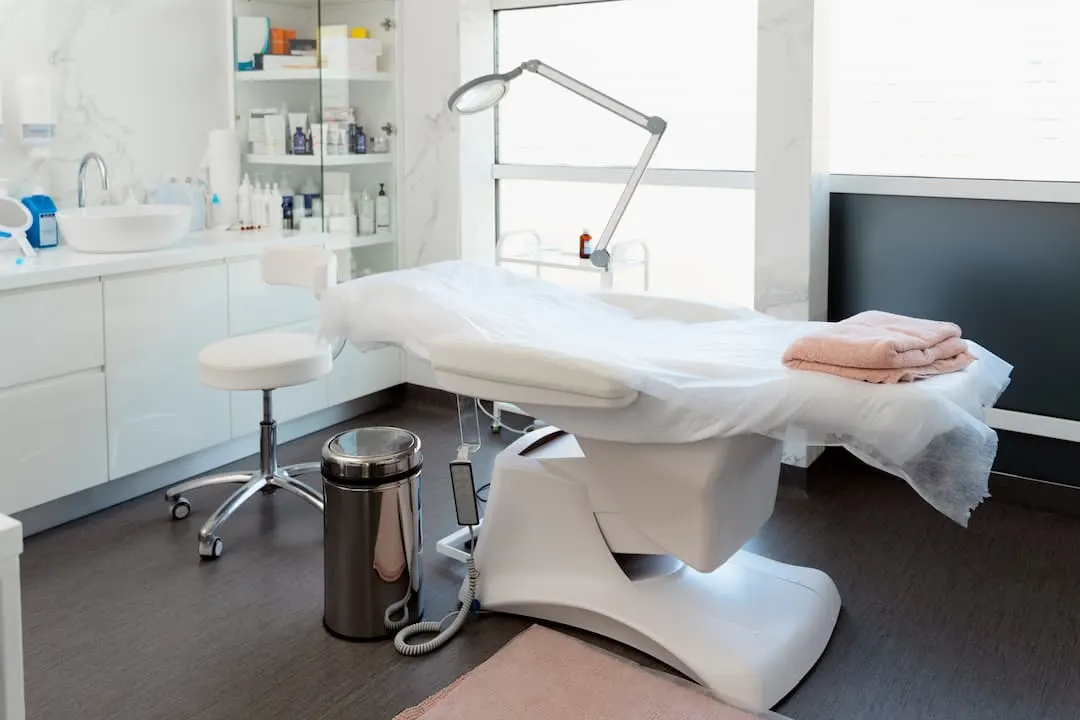
Dermatology is one of the fastest-growing medical specialties in the United States, and the infrastructure hasn't kept up. The U.S. dermatology market is projected to nearly double over the next decade, growing at over 7% annually. There are roughly 12,000 practicing dermatologists nationwide, but a persistent shortage means one-third of practices are actively looking for additional providers. Melanoma incidence alone has climbed 42% in the past decade, driving demand for both diagnostic and surgical dermatology services.
For dermatologists planning a new clinic or expanding an existing practice, this growth creates both opportunity and urgency. But dermatology clinics have design requirements that set them apart from general medical offices. The mix of high-volume medical appointments, in-office surgical procedures, laser treatments, and cosmetic services creates a facility that needs to function simultaneously as a fast-paced exam clinic, a surgical center, and a retail-oriented aesthetic practice.
Getting the design right affects everything - patient throughput, procedure safety, staff efficiency, and revenue potential. A well-designed dermatology clinic supports 30+ patient visits per provider per day while maintaining the surgical precision and patient experience that complex procedures demand.
This guide covers the spatial, technical, and regulatory requirements for building a dermatology clinic that performs across all service lines. Whether you're a solo dermatologist opening your first practice or a multi-provider group building a new facility, these design fundamentals will help you create a space that supports quality care and practice growth.
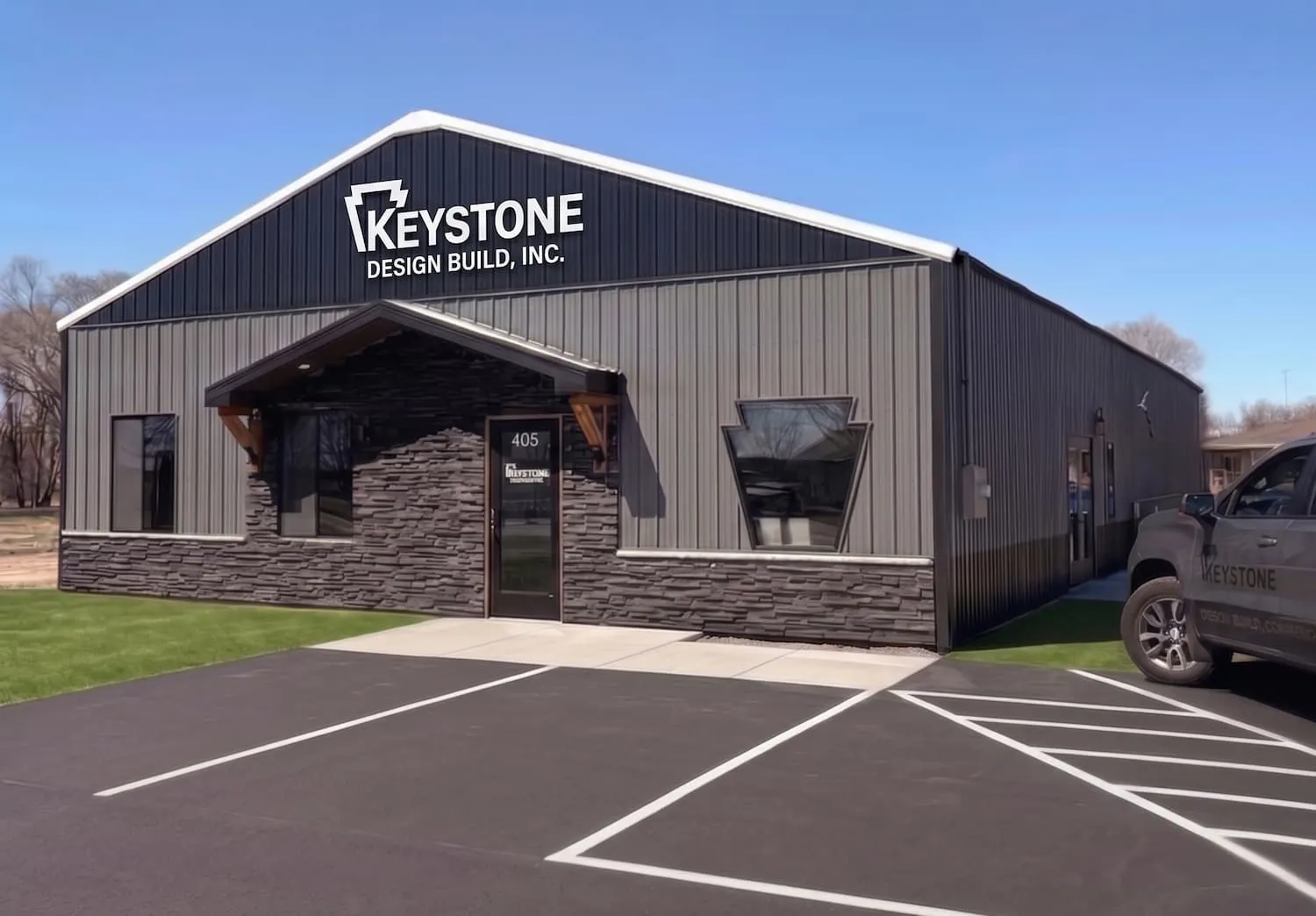
At Keystone Design Build, we've delivered specialized healthcare clinic construction throughout Central Minnesota for over two decades. Our in-house design team understands the unique demands of medical specialty clinics - from procedure room ventilation to laser suite electrical requirements - and builds facilities that work for providers, staff, and patients.
What Makes Dermatology Clinic Design Different
Dermatology practices operate differently from most medical specialties, and the building needs to reflect that.
Higher Room-to-Provider Ratio
Most medical specialties plan for 2-2.5 exam rooms per provider. Dermatology requires 3 to 4 rooms per provider. The reason is workflow: dermatologists typically move between rooms while medical assistants prepare patients and set up for procedures. With appointment durations ranging from 10 minutes for a follow-up to 60+ minutes for Mohs surgery, having more rooms per doctor keeps the provider productive and patients moving.
This higher ratio directly affects facility size. A three-provider dermatology practice needs 9-12 exam and procedure rooms, plus all the support spaces those rooms require. Underbuilding room count is one of the most common and costly mistakes in dermatology clinic design.
The Universal Exam Room Model
Unlike specialties that separate consultation rooms from procedure rooms, dermatology benefits from a "universal care" model where every exam room can handle both medical consultations and minor procedures. A patient who comes in for a skin check and needs a biopsy shouldn't have to be moved to a different room. The dermatologist examines, identifies a suspicious lesion, and performs the biopsy - all in the same room, in the same visit.
This means every exam room needs procedure-level capabilities: surgical lighting, instrument access, a sink, sharps disposal, and surfaces that support sterile technique. It costs more per room upfront but dramatically improves throughput and patient experience.
Dual Revenue Streams
Most dermatology practices generate revenue from two distinct service lines: medical dermatology (insurance-reimbursed) and cosmetic dermatology (patient-pay). These service lines have different spatial needs, different patient expectations, and often different branding. The facility needs to support both without creating confusion or friction.
Medical patients coming in for a skin cancer screening need efficient, clinical environments. Cosmetic patients coming in for laser treatments or injectable fillers expect a more upscale, spa-like atmosphere. How you separate, blend, or transition between these experiences is a core design decision.
Exam Room Design: The Universal Care Model
The exam room is the most repeated element in a dermatology clinic, and getting it right has an outsized impact on practice efficiency and revenue.
Sizing and Layout
Dermatology exam rooms need more space than typical primary care exam rooms because they double as procedure rooms:
- Minimum size: 10 by 12 feet (120 square feet); 10 by 14 feet (140 square feet) preferred for rooms that will handle surgical procedures
- Procedure chair: A height-adjustable, multi-position dermatology chair is the centerpiece - it needs 360-degree access so the provider can reach any body surface. Position it centrally with at least 3 feet of clearance on all sides
- Cabinetry: Wall-mounted upper and lower cabinets with a continuous countertop, integrated sink, and enough surface area for instrument trays and specimen cups
- Provider workstation: A computer workstation positioned so the provider faces the patient while charting - never with their back turned. Wall-mounted monitor arms keep screens adjustable and out of the procedure field
Lighting Requirements
Lighting is more critical in dermatology than in almost any other outpatient specialty. Accurate skin assessment depends on it:
- Exam lighting: High-CRI (Color Rendering Index 90+) overhead lighting at 500+ lux for accurate skin color assessment. Standard commercial fluorescent lighting distorts skin tones and can mask subtle color changes
- Procedure lighting: Ceiling-mounted or wall-mounted surgical examination light capable of 40,000+ lux at the field, with adjustable focus and positioning
- Natural light: Beneficial for general exams but needs to be controllable - direct sunlight creates glare and color distortion during skin assessments. North-facing windows or diffused glazing work best
- Photography lighting: Consistent, reproducible lighting for clinical photography (see Photography Station section below)
Infection Control Features
Every universal exam room needs:
- Handwashing sink with hands-free faucet controls
- Sharps container mounted at point of use
- Biohazard waste receptacle
- Non-porous countertops (solid surface or quartz)
- Seamless flooring (sheet vinyl or epoxy) with coved base for easy cleaning
- Wall protection behind procedure areas (FRP panels or epoxy-coated surfaces)
Electrical and Data
Dermatology rooms have higher electrical demands than standard exam rooms:
- Minimum 4-6 duplex outlets per room
- Dedicated circuit for exam light
- Network drops for EHR workstation and dermoscopy device
- USB charging for handheld diagnostic devices
- Consideration for future laser or light-therapy equipment in select rooms
Procedure Rooms: Mohs Surgery and Excisions
While the universal exam room handles most minor procedures, dedicated procedure rooms are essential for practices performing Mohs micrographic surgery, complex excisions, or procedures requiring deeper sedation.
Mohs Surgery Suite Requirements
Mohs micrographic surgery - the gold standard for treating certain skin cancers - has specific facility requirements because patients remain in the clinic for several hours while tissue is processed and examined between surgical stages:
- Procedure room size: 200-250 square feet minimum; larger if multiple assistants or trainees are present
- HVAC: Enhanced ventilation with 6+ air changes per hour; positive pressure relative to corridors
- Lighting: Ceiling-mounted surgical light with 80,000-100,000+ lux capability and shadow-free illumination
- Flooring: Seamless, non-porous surgical flooring - no carpet, no grout lines
- Walls: Washable, non-porous surfaces from floor to at least 48 inches; full-height preferred
- Cabinetry: Expanded instrument storage and counter space for sterile field setup
- Emergency equipment: Crash cart access, oxygen, and suction within the room or immediately adjacent
Mohs Lab (Histology)
Practices performing Mohs surgery need an on-site histology lab for frozen section processing:
- Size: 100-150 square feet
- Equipment: Cryostat (frozen section microtome), tissue staining station, microscope with digital imaging
- Ventilation: Chemical fume hood or dedicated exhaust for staining reagents (xylene, formalin)
- Plumbing: Sink with running water for staining protocols
- Adjacency: Direct proximity to the Mohs procedure room to minimize tissue transport time
- Electrical: Dedicated circuits for cryostat and microscope; UPS (uninterruptible power supply) recommended for cryostat
Patient Waiting During Mohs Stages
Mohs patients wait between surgical stages while tissue is processed - sometimes for an hour or more per stage, across multiple stages. The facility needs:
- A dedicated waiting area or recovery space separate from the main waiting room
- Comfortable seating with access to restrooms and refreshments
- Bandaged patients should not pass through the cosmetic waiting area
Laser and Cosmetic Treatment Suites
Laser and energy-based treatments are a major revenue driver for dermatology practices, but these devices create facility requirements that go well beyond a standard exam room.
Electrical Requirements
Laser equipment is the most electrically demanding component in a dermatology clinic:
- Voltage: Many medical-grade lasers require 208V or 230V single-phase power, not standard 120V
- Dedicated circuits: Each laser typically needs its own 30-amp or 50-amp dedicated circuit
- Panel capacity: Plan for 200-amp electrical service minimum for a multi-laser practice; confirm with an electrical engineer based on your specific equipment list
- Cooling: Some lasers require dedicated 208V cooling units that add to the electrical load
- Emergency power: Consider generator backup for lasers that cannot be interrupted mid-treatment
Ventilation and Safety
Laser procedures generate plume (smoke from tissue interaction) that requires specific ventilation:
- Smoke evacuation: A laser plume evacuator with HEPA and charcoal filtration at the point of use
- Room ventilation: 6+ air changes per hour minimum in laser treatment rooms
- Exhaust: Supplemental exhaust ventilation to manage heat generated by laser equipment and cooling systems
- Eye safety: Room must have proper laser safety signage, door interlocks or warning lights, and window coverings that block the specific laser wavelength in use
Room Design
Laser treatment rooms have distinct layout needs:
- Size: 120-160 square feet per treatment room; larger for rooms housing multiple devices
- Flooring: Non-reflective, non-static flooring - laser safety requires avoiding reflective surfaces
- Walls: Neutral, non-reflective wall colors
- Storage: Built-in cabinetry or closet space for treatment tips, consumables, protective eyewear, and positioning aids
- Aesthetics: Cosmetic treatment rooms should feel more refined than clinical procedure rooms - patients paying out-of-pocket for cosmetic treatments expect an elevated experience. Warm lighting, quality finishes, and a calming atmosphere matter here
Injectable and Aesthetic Treatment Rooms
For Botox, dermal fillers, chemical peels, and similar treatments:
- Standard exam room sizing (120 square feet) is adequate
- Good overhead lighting plus a magnifying examination light
- Full-length mirror for patient consultation
- Comfortable treatment chair with adjustable positioning
- Retail product display integration where appropriate
- Clean, modern finishes that align with aesthetic branding
Clinical Photography Station
Consistent clinical photography is essential for dermatology - documenting lesions, tracking treatment progress, and supporting medical-legal records. A dedicated photography setup is far more reliable than smartphone photos in exam rooms.
Dedicated Photography Room
The ideal setup is a dedicated photography room:
- Size: 80-100 square feet
- Background: Neutral-toned backdrop (medical blue or gray) - consistent and reproducible
- Lighting: Standardized photographic lighting with consistent color temperature and intensity; ring lights or dual-flash setups calibrated for clinical accuracy
- Camera system: DSLR or mirrorless camera with macro lens integrated into the practice management system
- Privacy: Full privacy for patients who may need to undress for total body photography
In-Room Alternative
Smaller practices can integrate photography into exam rooms:
- Wall-mounted backdrop panel that folds down
- Standardized lighting position marked on ceiling grid
- Consistent camera settings saved as presets
- Network-connected for direct upload to patient records
Patient Flow and Reception Design
Dermatology clinics see higher patient volumes than most specialties - 25-40 patients per provider per day is common. The facility must handle this volume without creating bottlenecks.
Reception and Check-In
- Waiting room sizing: Plan for 1.5-2 seats per exam room; a 12-room clinic needs seating for 18-24 patients and companions
- Check-in efficiency: Multiple check-in points or self-service kiosks to prevent queuing
- Separate cosmetic waiting: If your practice offers significant cosmetic services, consider a separate waiting area with upscale finishes, product displays, and a different atmosphere than the medical waiting room
- Subwaiting: Internal subwaiting areas near exam room clusters reduce time patients spend in gowns in hallways
Circulation
High patient volume means corridors see constant traffic:
- Corridor width: 5 feet minimum; 6 feet preferred for two-way traffic with wheelchairs
- Provider circulation: A back corridor or staff-only path between rooms allows providers to move efficiently without navigating patient traffic
- Gown management: Patients in dermatology frequently disrobe for full-body skin exams. Room-to-room movement in gowns should be minimized through good room clustering
Medical vs. Cosmetic Flow
Practices offering both medical and cosmetic services benefit from some degree of flow separation:
- Medical patients route from the main reception through clinical exam rooms
- Cosmetic patients route through a separate or enhanced entry to treatment rooms
- Shared back-of-house (staff corridors, sterilization, storage) serves both
- This separation can be achieved through floor plan zoning without requiring fully separate facilities
Support Spaces
Sterilization and Instrument Processing
Dermatology generates a high volume of reusable instruments:
- Central sterilization area with dirty-to-clean workflow
- Ultrasonic cleaner, autoclave, and instrument drying/storage
- Size: 80-120 square feet for a multi-provider practice
- Adjacency: Central location accessible to all exam and procedure rooms
Specimen Handling
For practices without an in-house Mohs lab, specimen management still requires dedicated space:
- Formalin-safe specimen storage with ventilation
- Labeling and tracking area
- Refrigeration for specimens awaiting pickup
- Courier staging area
Retail and Product Display
Many dermatology practices sell skincare products, sunscreens, and cosmeceuticals:
- Display area integrated into the reception/checkout zone
- Locked or supervised display for higher-value products
- 50-150 square feet depending on product range
- Lighting designed to showcase products attractively
Staff Areas
Dermatology clinics employ significant support staff (MAs, nurses, aestheticians, front desk):
- Break room separated from clinical areas
- Changing area/lockers for staff in scrubs
- Provider offices for charting, calls, and consultations
- Storage for personal items
Construction Costs for Dermatology Clinics in Minnesota
Dermatology clinics fall between standard medical office construction and ambulatory surgical center construction in cost, depending on the scope of surgical and laser services offered.
Cost Per Square Foot
Current dermatology clinic construction costs in Minnesota (2025-2026):
| Build Type | Cost Per Sq Ft | Description |
|---|---|---|
| Medical-only practice | $200-$275 | Exam rooms, basic procedure capability, standard finishes |
| Medical + surgical | $275-$350 | Mohs suite, enhanced procedure rooms, histology lab |
| Full-service (medical + surgical + cosmetic) | $325-$425+ | Laser suites, premium cosmetic finishes, retail space, dual-atmosphere design |
These ranges cover construction including mechanical, electrical, and finish requirements specific to dermatology. They exclude land, site work, major equipment (lasers, cryostats, cameras), and furniture.
Budget Examples
Small Practice (2,500 sq ft, 1-2 providers, medical + basic procedures)
- Construction: $500,000-$687,500
- Design and engineering: $50,000-$70,000
- Permits and fees: $8,000-$18,000
- Contingency (10%): $56,000-$78,000
- Total construction budget: $614,000-$853,500
Medium Practice (4,500 sq ft, 3-4 providers, medical + Mohs + cosmetic)
- Construction: $1,237,500-$1,575,000
- Design and engineering: $125,000-$160,000
- Permits and fees: $15,000-$30,000
- Contingency (10%): $138,000-$177,000
- Total construction budget: $1,515,500-$1,942,000
Large Practice (7,000 sq ft, 5+ providers, full-service)
- Construction: $2,275,000-$2,975,000
- Design and engineering: $230,000-$300,000
- Permits and fees: $25,000-$50,000
- Contingency (10%): $253,000-$333,000
- Total construction budget: $2,783,000-$3,658,000
Major Equipment Costs
Beyond construction, dermatology practices face significant equipment investments:
- Mohs cryostat: $30,000-$60,000
- Medical-grade lasers: $50,000-$250,000+ per unit (practices often have 3-6 devices)
- Dermoscopy and imaging systems: $5,000-$30,000
- Clinical photography system: $5,000-$15,000
- Procedure room furnishings (per room): $8,000-$20,000 (procedure chair, surgical light, cabinetry)
- Practice management/EHR: $10,000-$30,000 setup
Cost Drivers Specific to Dermatology
- Electrical infrastructure: Higher panel capacity for lasers, dedicated 208V/230V circuits, and backup power add $15,000-$40,000+ to electrical costs
- Procedure-level exam rooms: Building every room to handle minor surgery costs more than standard exam rooms but eliminates room-switching inefficiency
- Dual-atmosphere finishes: Supporting both clinical and cosmetic environments within one facility requires thoughtful material transitions
- Ventilation: Laser plume management, histology lab exhaust, and procedure room air changes increase HVAC scope
- Lighting: High-CRI clinical lighting and surgical-grade procedure lights cost significantly more than standard commercial fixtures
Minnesota Regulatory Considerations
Medical Practice Licensing
- Minnesota Board of Medical Practice oversees physician licensing
- Dermatology practices offering cosmetic services may have additional licensing requirements for aestheticians performing laser treatments under physician supervision
- Verify scope-of-practice regulations for PAs and NPs performing dermatological procedures
Facility Requirements
- Building codes: Minnesota State Building Code governs construction; dermatology clinics typically classify as Business (B) occupancy
- ADA: Full accessibility compliance including exam rooms accessible to patients with mobility limitations - procedure chairs with transfer capability
- Radiation safety: If offering phototherapy (narrowband UVB), Minnesota Department of Health regulations apply to UV-emitting equipment
- Laser safety: OSHA guidelines require a Laser Safety Officer, proper signage, protective eyewear, and controlled access to laser treatment areas
- OSHA: Bloodborne pathogen standards, formaldehyde exposure limits (relevant for histology labs), and hazard communication requirements
HIPAA and Privacy
Dermatology involves full or partial disrobing for skin exams. The facility must provide:
- Full visual and acoustic privacy in exam rooms
- Secure gowning areas
- Photography consent and image security protocols built into the workflow
- Separate storage and access controls for clinical photographs
Timeline: Design Through Opening
Dermatology clinics have moderate complexity compared to surgical centers, but laser suite electrical work and Mohs lab fit-out add time.
Design Phase: 3-4 Months
- Programming and provider workflow mapping: 2-3 weeks
- Schematic design: 3-4 weeks
- Design development: 4-6 weeks
- Construction documents: 4-6 weeks
- Permitting: 3-6 weeks
Construction Phase: 5-8 Months
- Tenant fit-up (existing shell): 4-6 months
- New construction (standard medical-only): 5-7 months
- New construction (full-service with Mohs and laser): 7-10 months
Equipment and Commissioning: 1-2 Months
- Laser equipment delivery, installation, and calibration
- Cryostat installation and testing (Mohs practices)
- IT and EHR setup
- Staff training on new equipment and workflow
- Inspections and certificate of occupancy
Total Project Duration
Most dermatology clinic projects take 10-14 months from initial design through opening. Design-build delivery compresses this by overlapping design and early construction activities, often saving 2-3 months versus traditional design-bid-build.
Why Design-Build Works for Dermatology
Dermatology clinics pack significant mechanical and electrical complexity into a relatively compact footprint. The design-build model keeps the architect, mechanical engineer, and construction team working together from day one.
Coordinating Complex Systems
Laser suites need dedicated high-voltage circuits routed from the electrical panel, enhanced ventilation, and specialty flooring - all within rooms that also need to look and feel like a quality medical environment. When the design and construction teams collaborate from the start, these systems get integrated cleanly rather than retrofitted during construction.
Right-Sizing the Investment
The difference between building a medical-only dermatology clinic and a full-service practice with Mohs and laser capability is substantial - potentially $100+ per square foot. Design-build gives you real-time cost feedback so you can make informed decisions about which service lines to build for now and which to plan for future expansion.
Building for Your Workflow
Every dermatology practice has a different mix of medical, surgical, and cosmetic services. Your facility should reflect your specific practice model, not a generic medical office template. At Keystone Design Build, our in-house design team works directly with providers to map their clinical workflow before drawing a single line. The result is a facility that supports how you actually practice.
We understand healthcare clinic construction at a level that translates directly to dermatology's unique requirements - from procedure room ventilation to laser suite electrical infrastructure to the patient experience details that distinguish a great clinic from an adequate one.
Frequently Asked Questions
How much does it cost to build a dermatology clinic in Minnesota?
Dermatology clinic construction in Minnesota ranges from $200-$275 per square foot for a medical-only practice to $325-$425+ per square foot for a full-service clinic with Mohs surgery suites, laser treatment rooms, and cosmetic service areas. A mid-size practice of 4,500 square feet typically costs $1.5-$1.9 million for construction, excluding land, major equipment, and furniture.
How many exam rooms does a dermatology clinic need?
Plan for 3-4 exam or procedure rooms per full-time dermatologist. This higher ratio compared to other specialties reflects dermatology's workflow, where providers move between rooms while staff prepares patients. A three-provider practice needs 9-12 rooms.
What special electrical requirements do laser treatment rooms need?
Medical-grade lasers typically require 208V or 230V single-phase power with dedicated 30-50 amp circuits. Each laser generally needs its own circuit. A multi-laser practice should plan for 200-amp minimum electrical service. Some lasers also require separate cooling units with dedicated power.
What is a Mohs surgery suite and what does it require?
Mohs micrographic surgery is a specialized skin cancer treatment where tissue is removed and examined in stages. The suite requires a procedure room (200-250 sq ft) with surgical-grade lighting and ventilation, plus an adjacent histology lab (100-150 sq ft) with a cryostat, chemical fume hood, and microscope station. A dedicated patient waiting area is also needed since patients remain in the clinic for several hours.
How long does it take to build a dermatology clinic?
Most dermatology clinic projects take 10-14 months from initial design through opening. This includes 3-4 months for design and permitting plus 5-8 months for construction. Full-service practices with Mohs labs and multiple laser suites take longer than medical-only clinics. Design-build delivery can save 2-3 months compared to traditional approaches.
Ready to discuss your dermatology clinic project? Schedule a free consultation with our team to explore how design-build delivery can create a facility that supports your practice model, your patients, and your growth plans.
Latest articles and news
Browse all Articles
Ready to build your vision?
Keystone Design Build handles every detail from concept to completion. Tell us about your project and get a free consultation.
Planning a project like this? See how we build health clinics, with recent projects and the questions owners ask us.